• Prelude:

    While I was moving some tomato plants around earlier this week, I couldn’t help but notice that they felt a little… prickly. Ouch! Close examination of tomato plants reveals that they are covered in tiny hair-like structures, which give them this texture (Figure 1). The next time you see a plant, you might also notice that many of them are sort of… fuzzy. Why? Because they’re covered in trichomes! Trichomes are projections of the epidermis – made of living cells – which perform a variety of important functions, including protecting plants against predators, limiting water loss, and shielding plants from solar radiation [6].

    Since trichomes are easy to see under the microscope (and make pretty pictures!), I figured that now was as good a time as any to talk a little bit about them.

    Figure 1. Large, hair-like trichomes on the stem of a beefsteak tomato plant. Left: Phone camera image; Right: Microscope image at 50X magnification.

    Trichomes in tomato:

    Now, I’ve spent a lot of time looking at Arabidopsis trichomes under the microscope. Why? Because they’re large single cells, transparent, and have particularly ginormous nuclei, possibly as a result of endoreplication – where DNA is repeatedly copied, but a cell doesn’t divide [5]. All of these traits are great if you want to image nuclei.

    Imagine my shock when I looked at tomato trichomes under the microscope. They’re multicellular – and there is more than one type! Looking back, I really shouldn’t have been surprised at all. Many species of plants have multicellular trichomes, including sunflowers – We’ll talk about those in a minute.

    You’re already acquainted with the long, hair-like trichomes in tomato (See Figure 1). What other kinds are there? To have a look, I scraped some epidermal cells off my Indigo Blue Beauty tomato plant and stuck them under the microscope. If you remember my first blog post about anthocyanins, I lamented at the difficulty of getting clear images of epidermal cells under the microscope. All of my images look like Figure 2 left (see below).

    Figure 2. Tomato epidermis at 100X magnification. Left and right panels show exactly the same sample; I just changed the focus on the microscope! The tips of glandular trichomes can be seen in the image on the right. 

    Blech! Why so blurry? The answer is glandular trichomes… they stick upwards out of the epidermis, and out of the plane of focus… which makes everything behind them blurry. By adjusting the focus on our microscope, we can see the ends of the of these trichomes clearly (Figure 2 right). The trichome tips are made of clusters of 4 cells, which sit at the end of a narrow stalk.

    I particularly like the image I captured in Figure 3, which shows 3 types of tomato trichomes sitting next to each other. The large hair-like trichome is HUGE and goes way off the end of the picture, while the small hair-like trichome and glandular trichome are tiny by comparison. Despite their enormous size, the large hair-like trichomes are still only one cell thick – and you can see them with the naked eye! Pretty neat. For your reference, the different types of tomato trichomes are nicely summarized by Tissier (2012) [12].

    Figure 3. Tomato epidermis imaged at 100X magnification and blown up even further to show detail. From left to right: A large hair-like trichome, a small hair-like trichome, and a glandular trichome can all be seen side-by-side.

    Great! So what do all these trichomes actually… do? The predominant idea is that tomato trichomes are primarily for defense against predators such as insects [12], though they may also play a role in water use efficiency and drought tolerance [4]. The hair-like, non-glandular trichomes (NGT’s) form a mechanical barrier to keep insects away from the surface of the plant, and may also damage the digestive systems of insects [11]. I couldn’t find a ton of information about NGT’s in tomatoes specifically, but I did come across this study in a related species, Solanum carolinense, which found that NGT’s impair feeding and weight gain in tobacco hornworm caterpillars [11].

    How about the glandular trichomes? I came across this interesting paper which demonstrates that fluid in the glandular trichomes is released as they come into contact with insect foes; The fluid sticks to insects and makes it difficult for them to move [10]. They even have video of this happening in their supplementary data [10]! I highly recommend. Anyway… The glandular trichomes also contain chemicals which inhibit insect feeding. For example, secretions from glandular trichomes are known to elicit stress and starvation responses in aphids [9]. The glandular trichomes in the wild tomato relative Solanum habrochaites produce a compound called zingiberene, which inhibits feeding by aphids [3]. One interesting study crossed this species with domesticated tomato to determine if it would be possible to breed tomatoes with increased aphid resistance [3]. The importance of this research to society is clear; if we want to continue to eat tomatoes en masse, we need to know how to protect them!

    Before we move on, I’d just like to muddy the waters a bit with this thought: Tomatoes use trichomes to repel insects that want to eat them. This has an unintended consequence: Predators which eat the insects which eat the tomato may also be repelled by the trichomes!

    In the wild, this is less of an issue; The tomato is on its own and needs to protect itself by any means necessary. But when tomatoes are grown domestically, humans give them help in the form of biological pest control – introducing predators to eat the pests. Trichomes may actually make this form of pest control less effective [7]. Therefore, using tomato varieties with lower trichome densities might paradoxically make it easier to control pest populations [7]. However, more work is needed to determine the efficacy of this approach.

    Trichomes in sunflower:

    Like tomatoes, sunflowers also possess multicellular trichomes of several different varieties. They have large, hair-like trichomes which give mechanical protection (easily visible on the developing head of a Teddy Bear sunflower, see Figure 4 left). They also have much smaller linear glandular trichomes (LGTs) – multicellular structures that resemble tiny strings of pearls (Figure 4 right bottom). As LGTs develop, the nuclei in the cells at the end of the trichome disappear, and these cells start to accumulate terpene compounds [2]. Terpenes are known to have insect repellent properties, implying that LGTs probably play an important role in insect defense [2].
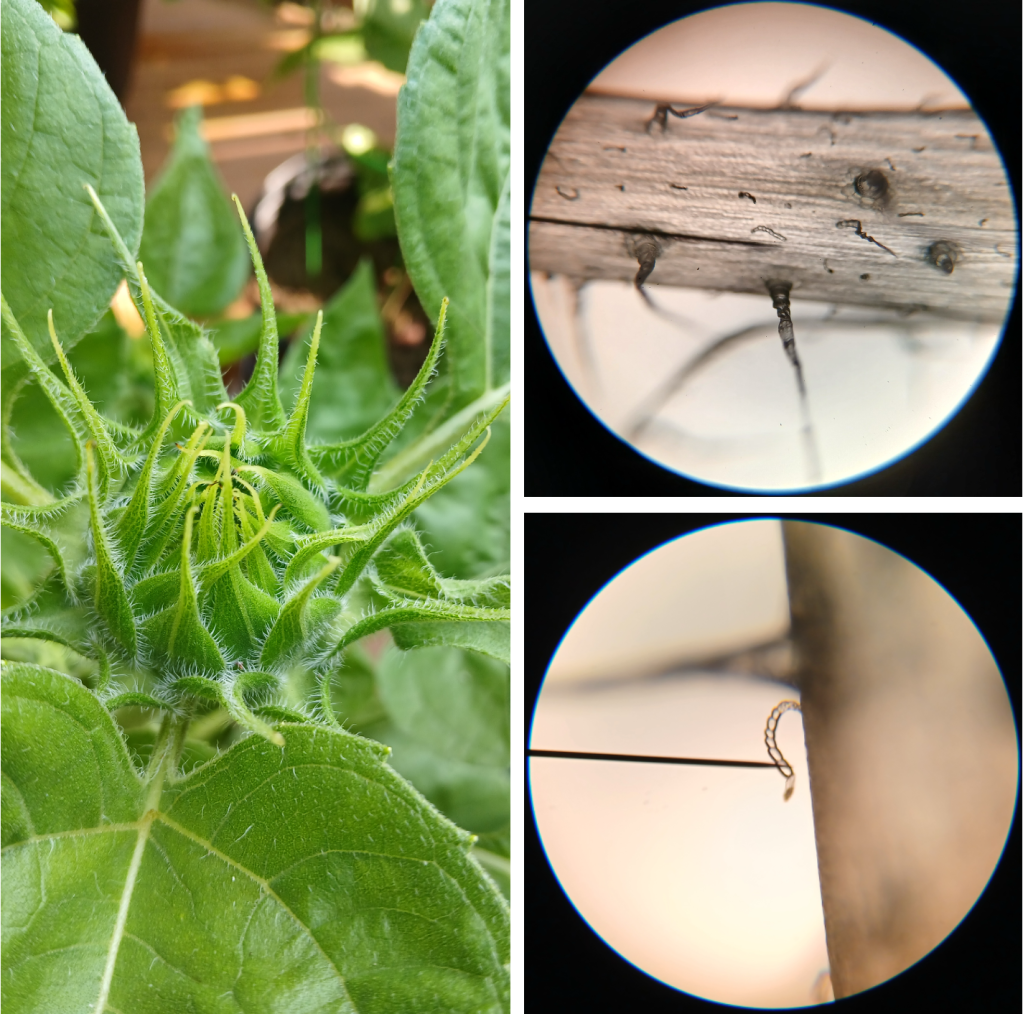
    Figure 4. Left: The developing head of a Teddy Bear sunflower is covered in white hairy trichomes. Right top: Sunflower bract at 100X magnification, showing both hairy trichomes and smaller linear glandular trichomes. Right bottom: Close-up of a linear glandular trichome at 400X magnification.

    For fun, I also had a look at some trichomes from the stem of my chocolate cherry sunflower (Figure 5). One thing you might notice right away is that the epidermal cells surrounding the hair-like trichomes lack the purple pigmentation found in the rest of the epidermis. I have no clue why this is, but it is interesting! The other observation I made is that the LGT’s often emerge from heavily pigmented areas of the epidermis, but contain no purple pigment themselves. Again, I have no idea why, but it is interesting.
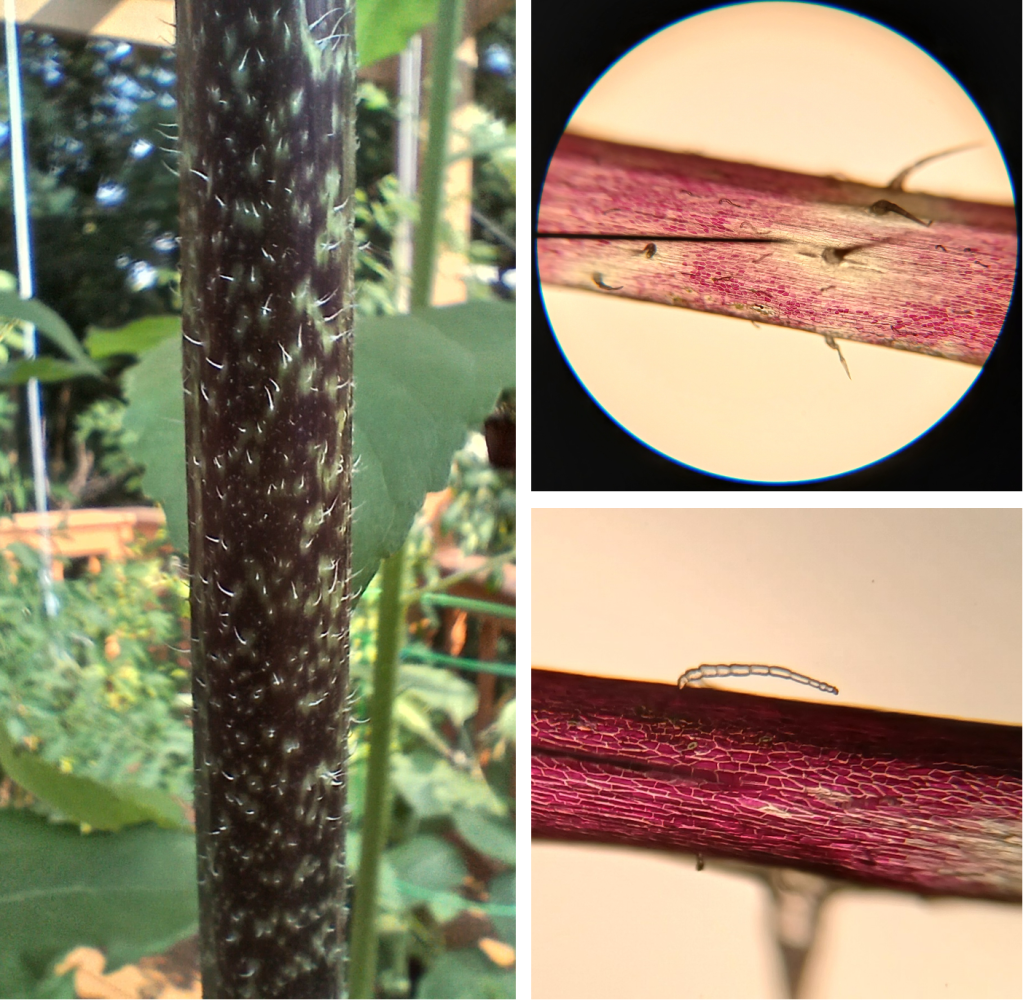
    Figure 5. Left: The stem of a chocolate cherry sunflower. Right top: Stem epidermal cells at 100X magnification, showing hair-like NGT’s and comparatively tiny LGT’s. Right bottom: A zoomed-in picture of an LGT protruding out of a heavily-pigmented patch of epidermal cells.

    Trichome guests of honor:

    This part is just for fun! I have a microscope… and I have a bunch of different plants to look at… so why not just check to see what I can see?

    I started with an eggplant plant. It doesn’t have visible hairs; instead, it is covered in a fine white fuzz. Closer examination reveals the presence of stellate (star-shaped) trichomes (Figure 6). They’re pretty crazy looking!

    Figure 6. Trichomes from the stem epidermis of an eggplant.

    I also had a look at a random plant growing near the house. I don’t know what it is exactly, other than the fact that it is a member of the mint family. It is absolutely covered in tiny hairs, giving it a silvery appearance (Figure 7 left). I just had to look at those under the microscope (Figure 7 right). Wow, so many!
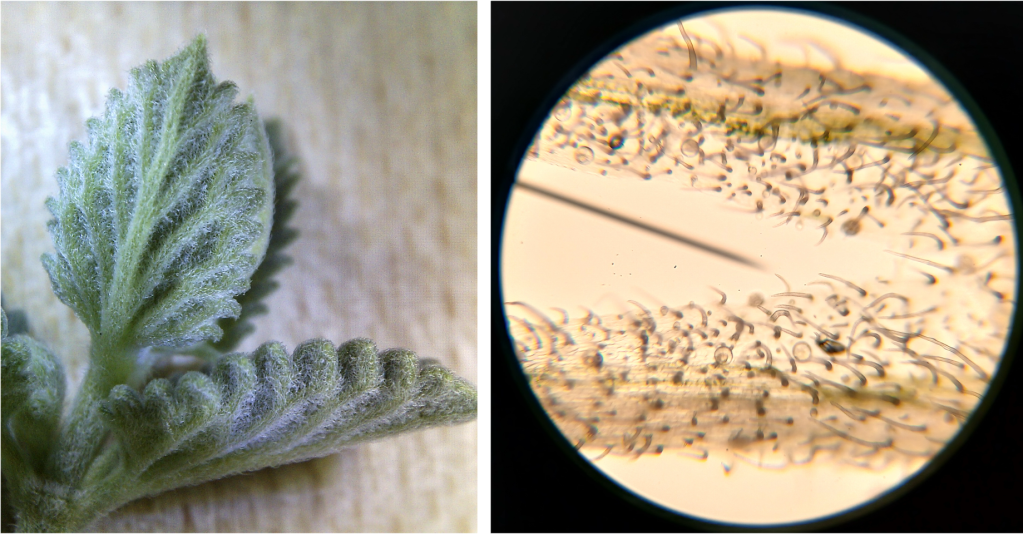
    Figure 7. Trichomes on a “mystery mint”. Left: A whole leaf, showing its fuzzy appearance. Right: Epidermis under the microscope.  

    Gene of the week!

    I am sorry for not talking more about the genetics underpinning trichome development. This lackluster performance is simply because I procrastinated and am running out of time I felt that a small blog post introducing the concept of trichomes wouldn’t do the topic justice.

    Despite this, I am pleased to present our Gene of the Week! I couldn’t find an account of a tomato or sunflower mutant completely lacking trichomes… darn. However, the GLABRA1 (GL1) gene in Arabidopsis is required for trichome formation! The gene’s name comes from the word “glabrous,” which means “hairless.” Loss-of-function gl1 mutants in Arabidopsis lack trichomes [8]. The GL1 protein is a transcription factor, meaning that it interacts directly with DNA and affects the expression of other genes [8]. In this case, these other genes just happen to be required for differentiation of epidermal cells into trichomes. According to the UniProt databse, the GL1 gene is located at the AT3G27920 locus on Arabidopsis chromosome 3, and codes for a protein which is 228 amino acids long, with a mass of roughly 26 kDa.

    Figure 8. Alphafold structure of AtGL1, taken from: https://alphafold.ebi.ac.uk/entry/P27900. The 2-part DNA-binding domain can be seen in blue (which indicates a high degree of confidence in the predicted structure).

    I did a quick search of the OMA database (https://omabrowser.org/oma/home/) to see if there are any known orthologs of GLABRA1 in tomatoes/sunflowers [1]. Orthologs are genes from different species which share a common ancestor. Identifying an ortholog of a gene with a known function in Arabidopsis in another plant species can allow us to guess that gene’s function (though of course only experiments can give us definitive information!). Surprisingly, the OMA database does not show any orthologs of GLABRA1 except in other members of the Brassicaceae family, of which Arabidopsis is a member. This raises the intriguing possibility that the transcriptional machinery which controls trichome development in the Brassicaceae may be different from those in other plant families.

    Works cited:

    [1] Altenhoff, A.M., Vesztrocy, A.W., Bernard, C., Train, C., Nicheperovich, A., Baños, S.P., Julca, I., Moi, D., Nevers, Y., Majidian, S., Dessimoz, C., & Glover, N.M. (2024). OMA orthology in 2024: improved prokaryote coverage, ancestral and extant GO enrichment, a revamped synteny viewer and more in the OMA Ecosystem. Nucleic Acids Research 52(D1), D513-D521. DOI: 10.1093/nar/gkad1020

    [2] Aschenbrenner, A., Horakh, S., & Spring, O. (2013). Linear glandular trichomes of Helianthus (Asteraceae): morphology, localization, metabolite activity and occurrence. AoB Plants 5, plt028. DOI: 10.1093/aobpla/plt028

    [3] de Oliveira, J.R.F., de Resende, J.T.V., Maluf, W.R., Lucini, T., de Lima Filho, R.B., de Lima, I.P., & Nardi, C. (2018). Trichomes and Allelochemicals in Tomato Genotypes Have Antagonistic Effects Upon Behavior and Biology of Tetranychus urticae. Frontiers in Plant Science 9. DOI: 10.3389/fpls.2018.01132

    [4] Galdon-Armero, J., Fullana-Pericas, M., Mulet, P.A., Conesa, M.A., Martin, C., & Galmes, J. (2018). The ratio of trichomes to stomata is associated with water use efficiency in Solanum lycopersicum (tomato). The Plant Journal 96(3), 607-619. DOI: 10.1111/tpj.14055

    [5] Kasili, R., Huang, C., Walker, J.D., Simmons, L.A., Zhou, J., Faulk, C., Hülskamp, M., & Larkin, J.C. (2011). BRANCHLESS TRICHOMES links cell shape and cell cycle control in Arabidopsis trichomes. Development 138(11), 2379-2388. DOI: 10.1242/dev.058982

    [6] Kaur, J., Kariyat, R. (2020). Role of Trichomes in Plant Stress Biology. In: Núñex-Farfán, J., Valverde, P. (eds) Evolutionary Ecology of Plant-Herbivore Interaction. Springer, Cham. DOI: 10.1007/978-3-030-46012-9_2

    [7] Lou, T., Maria, N., Marie-Stéphane, T., & Navia, D. (2024). Tomato trichomes: trade-off between plant defenses against pests and benefits for biological control agents. Open Science in Acarology 64(4), 1232-1253. DOI: 10.24349/ej2w-b311

    [8] Oppenheimer, D.G., Herman, P.L., Sivakumaran, S., Esch, J., & Marks, M.D. (1991). A myb gene required for leaf trichome differentiation in Arabidopsis is expressed in stipules. Cell 67(3), 483-493. DOI: 10.1016/0092-8674(91)90523-2

    [9] Planelló, R., Llorente, L., Herrero, Ó., Novo, M., Blanco-Sánchez, L., Díaz-Pendón, J.A., Fernández-Muñoz, R., Ferrero, V., & de la Peña, E. (2022). Transcriptome analysis of aphis exposed to glandular trichomes in tomato reveals stress and starvation responses. Scientific Reports 12, 20154. DOI: 10.1038/s41598-022-24490-1

    [10] Popowski, J., Warma, L., Cifuentes, A.A., Bleeker, P., & Jalaal, M. (2025). Glandular trichome rupture in tomato plants is an ultra-fast and sensitive defense mechanism against insects. Journal of Experimental Botany, eraf257. DOI: 10.1093/jxb/eraf257

    [11] Kariyat, R.R., Smith, J.D., Stephenson, A.G., De Moraes, C.M., & Mescher, M.C. (2017). Non-glandular trichomes of Solanum carolinense deter feeding by Manduca sexta caterpillars and cause damage to the gut peritrophic matric. Proceedings of the Royal Society B 284(1849), 20162323. DOI: 10.1098/rspb.2016.2323

    [12] Tissier, A. Trichome Specific Expression: Promoters and Their Applications. Editor: Yelda Özden Çiftçi. Transgenic Plants – Advances and Limitations. Publisher; 2012:353-378. Accessed August 8, 2025. DOI: 10.5772/32101
  • Supertall

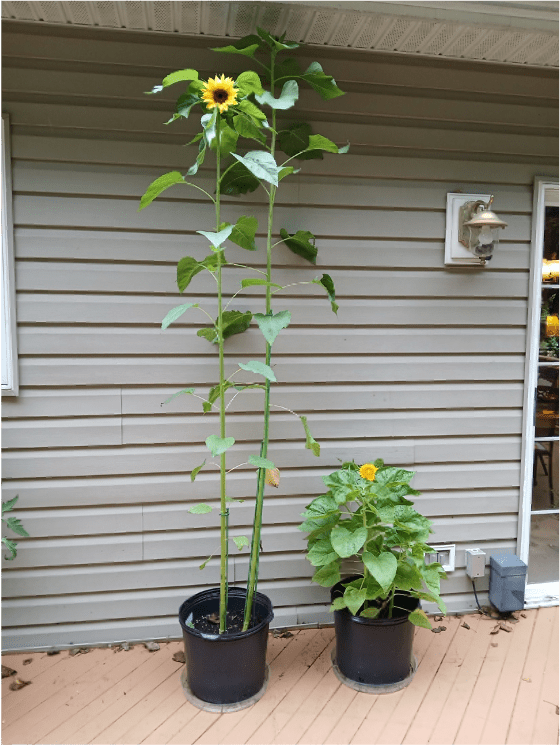
    This week I’d like to draw your attention to these two sunflower varieties I have growing on my deck (Figure 1). Bear in mind that all of these plants belong to the same species of sunflower, Helianthus annuus. The pot on the left contains two individuals of the cultivar “Lemon Queen,” while the pot on the right contains three individuals of the cultivar “Teddy Bear.” Seeds of each variety are easily acquired if you want to try growing them yourself.

    These plants are the same age and have been growing in the same conditions in the same type of soil. Lemon Queen is a typical height for a sunflower plant. So why the heck is Teddy Bear so short?? The short answer (hardy har) is that I don’t know precisely why. But the journey that led me to this earth-shattering conclusion was intriguing nonetheless! Join me as we go down a veritable rabbit hole about sunflower plant height.

    Figure 1. Sunflower “Lemon Queen” (pot on the left) vs. “Teddy Bear” (pot on the right).

    Why are dwarf sunflowers desirable?

    There are many varieties of dwarf sunflower available to buy, and they are desirable for a few reasons. Their compact size means that they can be grown when space is limited, and smaller flower heads fit nicely into cut flower arrangements.

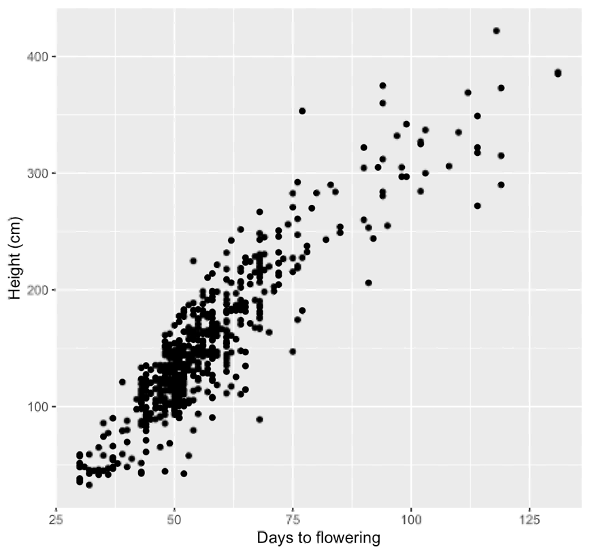
    You might wonder whether smaller sunflower varieties mature faster, since they do not need to grow as much before flowering. This is not necessarily the case; My Teddy Bear and Lemon Queen plants flowered at roughly the same age. However, we can address this question more broadly by using the data stored in the HeliantHome database [4]. They have plant height and flowering time data for hundreds of individual plants representing roughly 60 distinct wild populations of Helianthus annuus. Is there a correlation between plant height and flowering? If we plot plant height against flowering time, we can clearly see that there is a strong correlation (Figure 2). From this, we can say that amongst wild populations, sunflower plants that flower earlier tend to be shorter.

    There is a caveat, however. It is not clear whether the short plants in this dataset are true dwarf varieties, or whether they are simply short because they were grown in conditions which are not ideal for them. Stress may also affect plant growth and flowering time.  

    Figure 2. Days to flowering vs. plant height at flowering (cm). Data are taken from the HeliantHome database [4].

    Zooooooom!

    Sunflowers, like all plants, are made of cells. Therefore, the dramatically short stature of the Teddy Bear sunflower could be due a to 2 factors:

    1. It could have shorter cells in the stalk, OR…
    2. It could have less cells overall in the stalk, OR… both!

    To see what’s going on here, I peeled some epidermal cells off the stalks of my Lemon Queen and Teddy Bear plants and estimated their height under the microscope. I sampled both Lemon Queen plants and all three Teddy Bear plants.

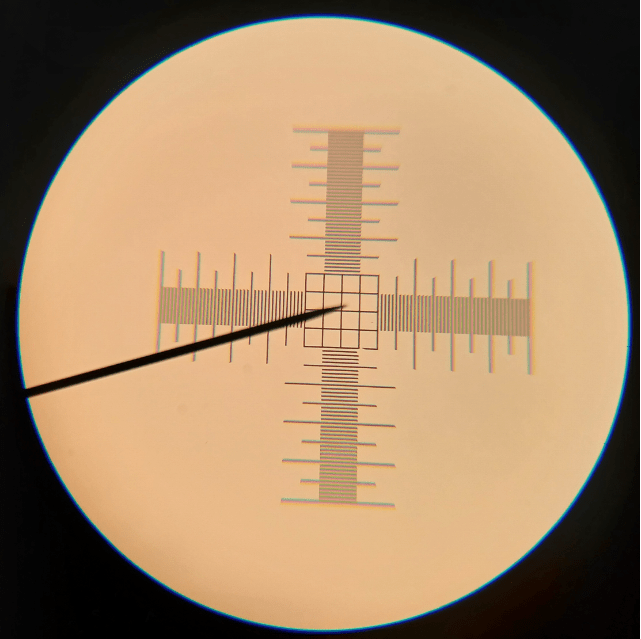
    How do we estimate cell height? We use a calibration slide, of course! It’s essentially a tiny ruler printed on a microscope slide that acts as a point of reference for what we’re seeing. It looks like this:

    Figure 3. Markings on a calibration slide at 100x magnification. The distance between the smallest lines is 0.01 mm (or 10 µm).

    Problem: How do we pick which cells to measure, and how do we measure them? This is admittedly arbitrary. My estimate of average cell height is just that… an estimate. I took the cell samples halfway up the stem of each plant, so the cells were hopefully about the same age. I picked a sample of 10 cells close to my ruler with clearly-defined borders, and I measured their vertical height (See Figure 4, samples are lying horizontally). Length measurements were done using a free image analysis program called FIJI.

    Figure 4. Microscopy images of the cells used to estimate cell size in Lemon Queen (Left) and Teddy Bear (Right). Colored bars indicate where length measurements took place.

    Table 1: Epidermal cell heights (in µm) in two different sunflower cultivars.

    Lemon QueenTeddy Bear
    Plant 1Plant 2Plant 1Plant 2Plant 3
    92.6557.136113.08960.33146.901
    58.897100.75547.6742.05836.073
    63.2473.01843.85239.68539.913
    80.93665.04762.27861.12456.272
    61.06966.65267.66584.91440.693
    66.94853.94769.21557.14129.698
    87.07648.388106.10454.76150.006
    73.53376.94563.81672.21346.094
    73.52969.80683.09569.03935.938
    75.01479.32573.04234.91667.192
    AVERAGE cell height across all plants (µm):71.19658.493

    While there might be a slight difference, I wouldn’t say that Teddy Bear has dramatically smaller cells than Lemon Queen. In fact, the arbitrary nature of my sampling method does not give me fabulous confidence that this difference is meaningful at all. Based on this, I would say that the reduced height of Teddy Bear plants is almost entirely due to a smaller number of cells.

    Just for fun: My Lemon Queen plants clocked in at an average height of 81.25 inches (2,063,750 µm), and my Teddy Bear plants had an average height of 19.33 inches (490,982 µm). Using our average values for cell height (see Table 1), we find that our average Lemon Queen plant is ~29,000 epidermal cells tall, while the average Teddy Bear plant is just ~8,000 epidermal cells tall.

    What genetics cause dwarfism in sunflowers?

    Surprisingly, I could only find one study which definitively identifies a genetic cause for dwarfism in sunflowers. Fambrini et al. determined that a loss-of-function mutation in a gene called HaKAO1 results in sunflower plants with an extreme dwarf phenotype [3]. HaKAO1 codes for an enzyme which helps to produce hormones called gibberellins; Without it, plants produce less gibberellins, and do not grow as large [3]. However, the phenotype of their mutant line (called “dw2”) was much more extreme than the dwarfism we see in Teddy Bear plants. Furthermore, a defining feature of the dw2 mutant is small cell size, which Teddy Bear lacks (see above). Therefore, a mutation in HaKAO1 is unlikely to be responsible for the short stature of Teddy Bear sunflowers.

    Without a direct source to tell me why Teddy Bear sunflowers are short, I had to resort to more desperate measures. One idea I had was to look for genome-wide association studies (GWAS) which include Teddy Bear in their sampling population. What is GWAS? Basically, we look at variable genetic elements in a large group of individuals, then we look at a phenotype (for example, height) in these individuals, and finally we look for statistically significant associations between particular genetic variants and the phenotype. Doing this allows us to pinpoint specific genetic loci which might affect our phenotype of interest, which we can then test in further experiments.   

    One common kind of variable genetic element used for GWAS is the SNP (single nucleotide polymorphism). SNPs occur when a single DNA base pair is exchanged for another one. For example, in a hypothetical DNA sequence ATGCATC (only one strand shown), replacing the middle “C” with a “G” (like this: ATGGATC) constitutes a SNP. SNPs are handy because they are easy to detect, and because they are very common in many genomes, giving good coverage.

    So anyway, my first idea was… look for GWAS studies which examine sunflower height… then check if Teddy Bear was used in their sampling population… then check whether Teddy Bear has any SNPs which strongly correlate with height! I could only find two sources of GWAS data which examined sunflower plant height. The first source was a dataset published by Delen et al. (2024) [2], and the second source was a dataset published by Todesco et al. (2020) and linked through to HeliantHome [7]. But neither dataset had Teddy Bear in their sampling population! Nuts.

    Figure 5: These plots are taken directly from the EasyGWAS page, which represents the Todesco GWAS dataset [7]. Top: Manhattan plot showing position of SNPs on sunflower chromosome 7 (x-axis) and statistical association of these SNPs with plant height (y-axis). One SNP with a statistically significant association with height is highlighted by the red arrow. Bottom: Distributions of plant height for plants with different variations at the SNP locus identified in the Manhattan plot above. Plants with the G/G allelic combination tend to be shorter than those with T/T or G/T.

    OK, what now? Well, the Delen and Todesco datasets give us a set of SNPs which have a strong correlation with plant height. A genome assembly for Teddy Bear is not available. But there might be SNP data for Teddy Bear in another GWAS dataset! In theory, I might be able to use such a dataset to check whether Teddy Bear has any SNPs which are associated with plant height.

    Alas, I only found a single GWAS source which contains Teddy Bear; Talukder et al. (2019) [6]. Then I encountered another problem… the genetic maps that Talukder, Delen, and Todesco used to denote the location of their SNPs are different [2][6][7]! And reconciling different genetic maps is no trivial task, especially if full sequencing data isn’t available. Without more data, my dreams of identifying a possible genetic reason for the Teddy Bear’s short stature have been dashed. I guess we can’t always get what we want. (But seriously, if you have any ideas, help would be greatly appreciated!)

    Gene of the week:

    After that rather uninspiring conclusion, let’s now have a little pick-me-up with Gene of the Week ™ ! (EDIT: I’ve been informed that I need to clarify that the trademark is merely a joke, for legal reasons). Since it’s the only gene we really discussed in this post, let’s make this week’s Gene of the Week HaKAO1, or more generally any gene coding for the enzyme ent-kaurenoic acid oxidase. These enzymes catalyze a reaction that is required for the synthesis of gibberellins, which are hormones that control plant development. As previously discussed, a loss-of-function mutation in HaKAO1 is associated with an extreme dwarf phenotype in sunflowers [3]. In the model plant Arabidopsis, a double mutant called kao1 kao2 also displays a marked dwarf phenotype [5]. In this case, mutations in both genes are required to see a phenotype; This is an example of genetic redundancy.

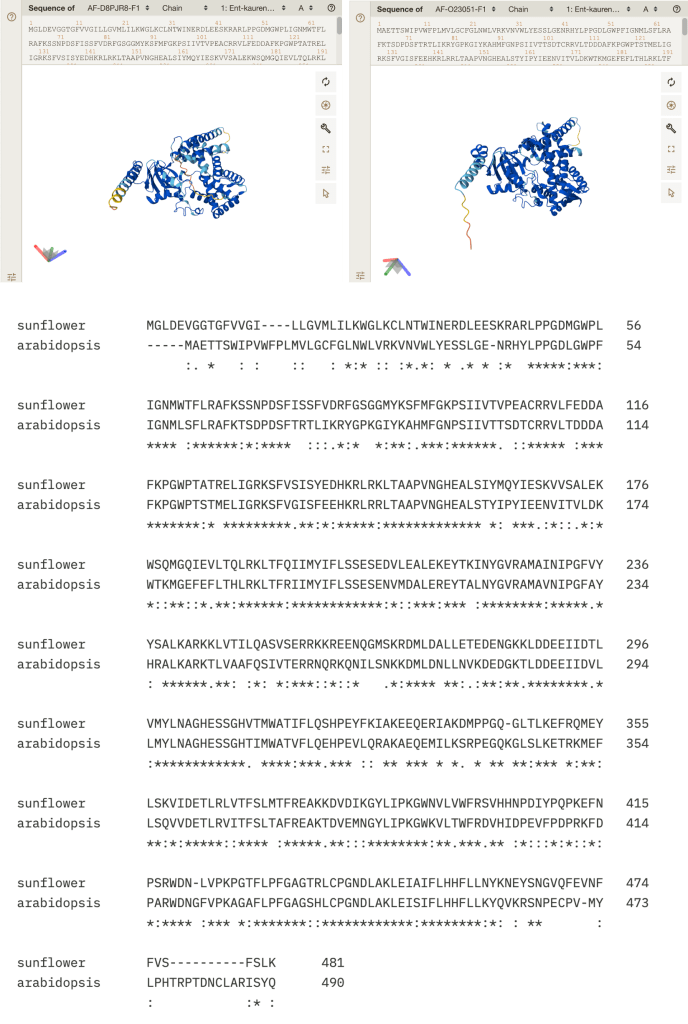
    The predicted structure of the KAO1 proteins from sunflower and Arabidopsis are very similar, which is unsurprising since their sequences are so similar (and Alphafold predicts structure based on sequence homology). See Figure 6 below.

    Figure 6. Top: Alphafold predicted structures of KAO proteins from sunflower (left) and Arabidopsis (right). The Alphafold models used in this figure may be found at: https://alphafold.ebi.ac.uk/entry/D8PJR8 and https://alphafold.ebi.ac.uk/entry/O23051. Bottom: Sequence alignment between sunflower and Arabidopsis KAO1 proteins. The alignment was made using Clustal Omega (https://www.ebi.ac.uk/jdispatcher/msa/clustalo?stype=protein) with default parameters.

    Epilogue:

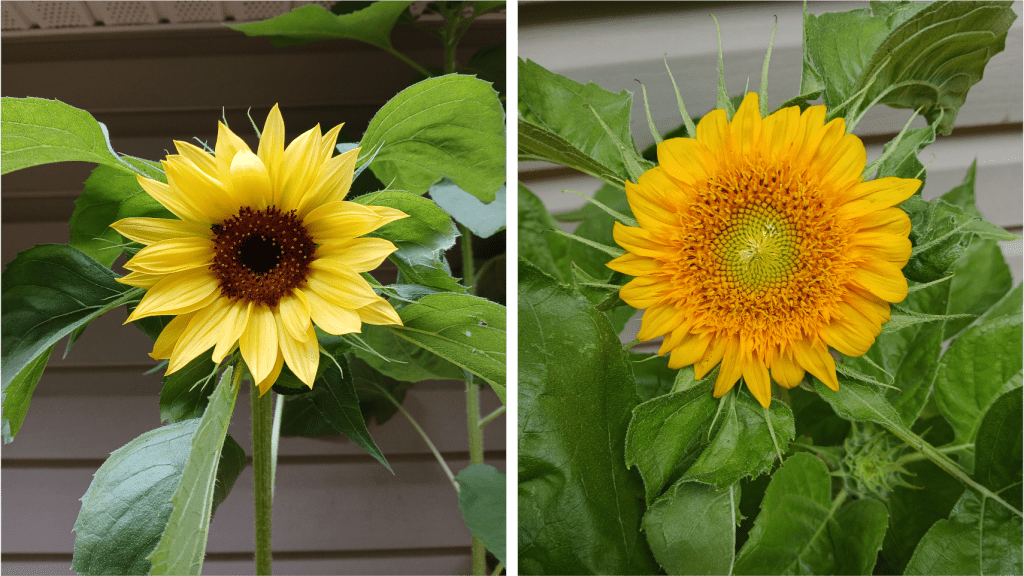
    If you’re wondering about the name “Teddy Bear,” it comes from the habit of this variety to produce fluffy looking inflorescences. (Sunflowers are actually made up of many individual flowers, which are collectively called an inflorescence). The flowers on the outer edge of a typical sunflower produce large, showy petals, while the flowers in the middle are much smaller by comparison. In Teddy Bear, the middle flowers also produce large, showy petals, giving the “fluffy” appearance. My Teddy Bear isn’t the most spectacular example of this variety, but the unusual inflorescence phenotype can still be seen in Figure 7 below.

    Researchers have actually identified the gene responsible for the inflorescence phenotype of Teddy Bear as HaCYC2c, which codes for a transcription factor that promotes the formation of flowers with large petals [1]. In varieties with the “fluffy” phenotype, the DNA sequence that lies upstream of the protein-coding sequence of the HaCYC2c gene is altered. This causes HaCYC2c to be expressed throughout the whole inflorescence rather than simply in the flowers on the edge… giving us “fluffy” flowers [1]!

    Figure 7. The inflorescence of Lemon Queen (left) vs. the inflorescence of Teddy Bear, right.

    I should point out that some varieties which have the same “fluffy” inflorescence structure as Teddy Bear, such as “Sungold Tall,” do not have the dwarf phenotype. Hence, the alteration at the HaCYC2c locus cannot explain the short stature of the Teddy Bear sunflower.

    Works Cited:

    [1] Chapman, M.A., Tang, S., Draeger, D., Nambeesan, S., Shaffer, H., Barb, J.G., Knapp, S.J., & Burke, J.M. (2012). Genetic Analysis of Floral Symmetry in Van Gogh’s Sunflowers Reveals Independent Recruitment of CYCLOIDEA Genes in the Asteraceae. PLoS Genetics 8(3), e1002628. DOI: 10.1371/journal.pgen.1002628

    [2] Delen, Y., Palali-Delen, S., Xu, G., Neji, M., Yang, J., & Dweikat, I. (2024). Dissecting the Genetic Architecture of Morphological Traits in Sunflower (Helianthus annuus L.) Genes 15(7), 950. DOI: 10.3390/genes15070950

    [3] Fambrini, M., Mariotti, L., Parlanti, S., Picciarelli, P., Salvini, M., Ceccarelli, N., & Pugliesi, C. (2011). The extreme dwarf phenotype of the GA-sensitive mutant of sunflower, dwarf2, is generated by a deletion in the ent-kaurenoic acid oxidase1 (HaKAO1) gene sequence. Plant Molecular Biology 75, 431-450. DOI: 10.1007/s11103-011-9740-x

    [4] HeliantHome: A public and centralized database. Home of a comprehensive collection of phenotypes for different Sunflower species. Retrieved August 2, 2025, from: http://www.helianthome.org/

    [5] Regnault, T., Davière, J., Heintz, D., Lange, T., & Achard, P. (2014). The gibberellin biosynthetic genes AtKAO1 and AtKAO2 have overlapping roles throughout Arabidopsis development. The Plant Journal 80(3), 462-474. DOI: 10.1111/tpj.12648

    [6] Talukder, Z.I., Ma, G., Hulke, B.S., Jan, C., & Qi, L. (2019). Linkage Mapping and Genome-Wide Association Studies of the Rf Gene Cluster in Sunflower (Helianthus annuus L.) and Their Distribution in World Sunflower Collections. Frontiers in Genetics 10, 216. DOI: 10.3389/fgene.2019.00216

    [7] Todesco, M., Owens, G.L., Bercovich, N., Légaré, J., Soudi, S., Burge, D., Huang, K., Ostevik, K.L., Drummond, E.B.M., Imerovski, I., Lande, K., Pascual-Robles, M.A., Nanavati, M., Jahani, M., Cheung, W., Staton, S.E., Muños, S., Nielsen, R., Donovan, L.A., Burke, J.M., Yeaman, S., & Rieseberg, L.H. (2020). Massive haploypes underlie ecotypic differentiation in sunflowers. Nature 584, 602-607. DOI: 10.1038/s41586-020-2467-6. GWAS data are available to view at: https://easygwas.biochem.mpg.de/gwas/results/manhattan/view/37d3d070-e7cf-4388-be6d-05be6907d451/   

  • What are anthocyanins?

    Anthocyanins are a family of pigments found in many plants that confer red/purple/blue coloration. While there are many kinds of anthocyanin pigments, they all share the same core structure consisting of a flavylium backbone (highlighted in Fig. 1 below) [13]. This backbone is then modified to give a variety of pigments with different properties. Anthocyanins are produced in a well-characterized biochemical pathway which uses phenylalanine (an amino acid, such as you might find in protein powder) as the starting point [13][23].

    Figure 1: Nasunin, an anthocyanin found in eggplants. Image taken from the Pubchem compound summary for Nasunin [17]. The green square highlights the location of the modified flavylium backbone.

    Where can I see anthocyanins?

    Plants with observable anthocyanins are all over the place! If a plant is a rich red to purple color, there is a reasonable chance that this coloration is due to anthocyanin pigments (though it is always a good idea to do an online search to be sure). One common example of a plant with clearly visible anthocyanin pigments is the japanese maple (Acer palmatum), which often possesses leaves with red or darker coloration. It’s a popular garden plant; I’m sure you could find one if you look!

    Anthocyanins are also present in plants eaten for food. Particularly striking examples include red cabbage, red grapes, and many kinds of darkly-colored berries, but there are many others.

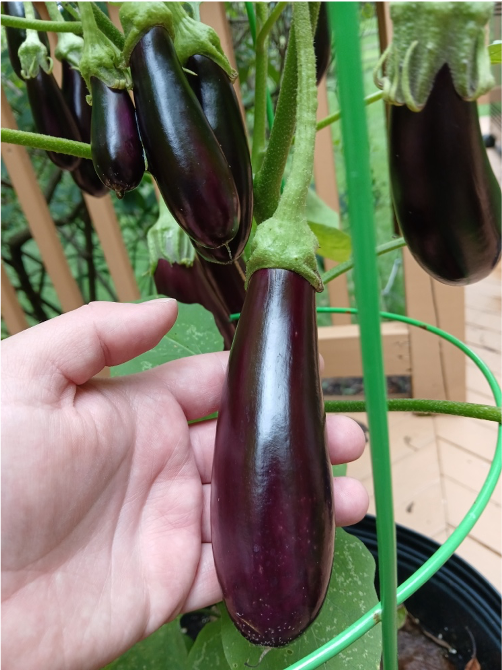
    Figure 2: Many eggplants are a dark purple color due to the presence of anthocyanin pigments.

    What do anthocyanins do?

    One popular theory is that anthocyanins give plants protection from high light levels. Of course, plants need light for photosynthesis, but once a certain rate of photosynthesis has already been achieved, excess light increases the chance that valuable photosynthetic machinery could be damaged (since light can drive chemical reactions!). Anthocyanins absorb excess light, thus preventing damage to the photosynthetic machinery.

    Demonstrating the protective effect of anthocyanins is not trivial from a scientific perspective. To do this, you would need to compare some aspect of photosynthetic performance in two groups of plants subjected to high light levels. These two groups of plants should be as similar as possible to each other in every way (minimize the number of variables!), and should ideally differ only in anthocyanin content. Hypothesis: If anthocyanins protect photosynthetic machinery from damage, then we would expect “improved” photosynthetic performance in the group of plants with high anthocyanin content, as compared to the plants with lower anthocyanin content.

    I have added a link here to a study by Gould et al. (2018) which does exactly this [5]! In this study, they use a plant called Arabidopsis thaliana, which is commonly used in scientific research (think lab rat, but green and leafy). Their Arabidopsis strain with relatively low anthocyanin content is called Col-0 (Columbia-0). Col-0 is a so-called “wild-type” strain, meaning that it is a direct descendent of an Arabidopsis ancestor collected in the field, which has not been genetically modified. Their Arabidopsis strain with high levels of anthocyanins is called pap1-D, which is a descendent of Col-0 (hence, very similar!). However, pap1-D has been genetically modified to overexpress the PAP1 gene, which in turn causes over-accumulation of anthocyanins. (More information about pap1-D may be found here: [2]).

    To assess photosynthetic performance, they measured the maximum quantum efficiency of photosystem II (Fv/Fm). The precise definition of this term is beyond the scope of this blog post, but more information can be found in this excellent article here: [15]. Generally speaking, a high Fv/Fm value indicates efficient photosynthesis, while a lower Fv/Fm indicates inefficient photosynthesis (possibly due to light-induced damage). Gould et al. measured Fv/Fm before and after exposing plants to high light levels, and noted the decrease in Fv/Fm following high light exposure. The pap1-D plants, which contain higher levels of anthocyanins, showed a smaller reduction of Fv/Fm following high light exposure than the Col-0 plants (indicating less accumulated damage). This result agrees with our hypothesis!

    Given that anthocyanins indeed appear to protect plants against high light levels, it makes sense that anthocyanin production can itself be regulated by the prevailing light conditions. In Arabidopsis, blue light and UV-B in particular promote anthocyanin accumulation, more so than other colors of light [1][6][8].

    What else do anthocyanins do?

    Anthocyanins are also produced in response to other kinds of stress, such as drought stress [11]. Indeed, this interesting paper [16] by Nakabayashi and colleagues shows that our old friend, pap1-D, has improved survival in controlled drought conditions as compared to Col-0. Exactly why this occurs is unclear, but the antioxidant properties of anthocyanins may help to relieve oxidative stress induced by drought conditions, and water loss from pap1-D plants in drought conditions may be marginally lower than in Col-0 [16].

    Anthocyanin content is also a desirable trait that is often selected for in domesticated plants. Why? Because it looks cool. And there’s no better reason than that.

    There is some interest in the nutritional value of anthocyanins, and many claims of health benefits, particularly owing to their antioxidant properties [7]. For now, I would consider these claims with considerable caution. Benefits to human health are difficult to assess, because experimenting on people is often unethical, and the results of epidemiological studies can be difficult to interpret. One study using rats as a model to study myocardial infarctions (heart attacks) did find that infarction size (volume of dead tissue within hearts whose blood supply had been artificially restricted) was modestly reduced in rats who had been fed a diet high in maize anthocyanins for 8 weeks vs. those fed a diet lacking anthocyanins [25]. (If you are a bit lost like I was while reading this article, there’s good background information here: [4]). Another study in rats claimed to find evidence that anthocyanins in soybean are protective against obesity [9]. It is unclear whether these effects translate to humans at all, so more work is needed before we can confidently discuss the roles that anthocyanins play in human health.

    Anthocyanins in tomatoes:

    We will (hopefully!) talk a fair bit about sunflowers and tomatoes in this blog. This is because:

    1. They are super easy to grow if you have the time and space!
    2. There are many varieties of each, which have been selectively bred to exhibit various desirable traits.

    Comparing different cultivars of sunflower and tomato gives us a great stepping-in-point to discuss many concepts in plant science.

    Now, we have a few different varieties of tomato growing on our deck. I don’t really like tomatoes. I suppose they’re nice in caprese salad. Whatever. They’re still fun to grow.

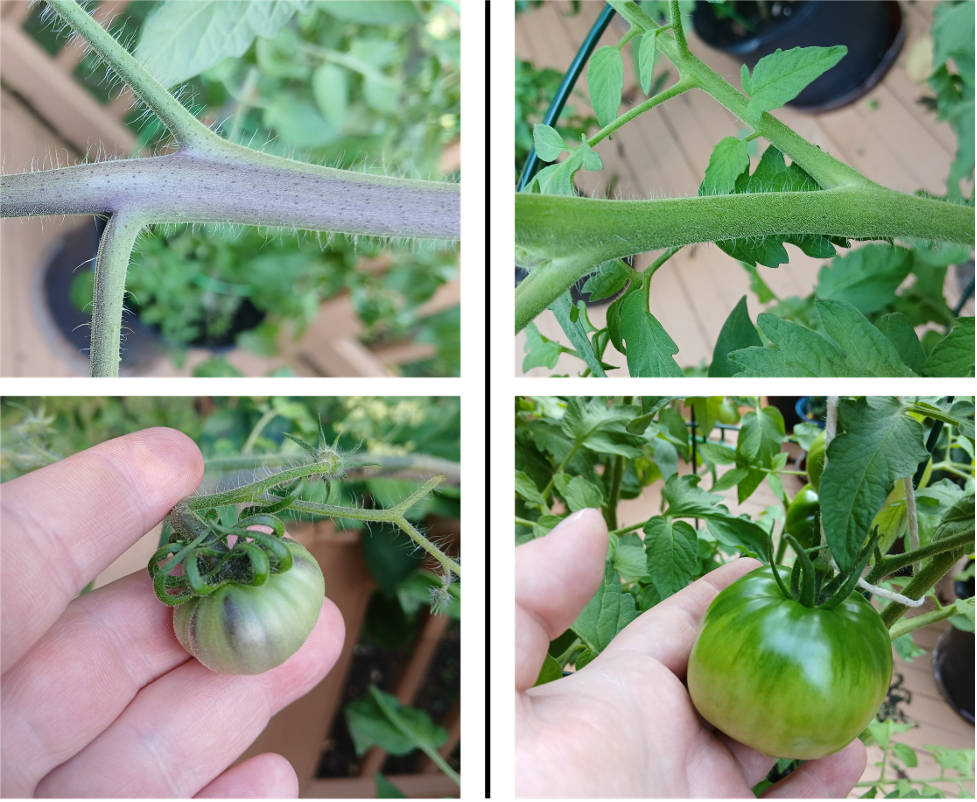
    I’ve been observing the development of two particular varieties with great interest. One variety, “Indigo Blue Beauty,” exhibits purple coloration on stems and developing fruits, which is due to the presence of anthocyanins (Fig. 3). Compare this to another variety, “Black Krim,” which has does not have observable anthocyanin accumulation in either part. Actually, Black Krim is a variety known for darker-colored fruits… but in this case, a different pigment called pheophytin – not an anthocyanin – is responsible [21].

    Figure 3: Left: Stem and developing fruit of tomato “Indigo Blue Beauty.” Right: Stem and developing fruit of tomato “Black Krim.”

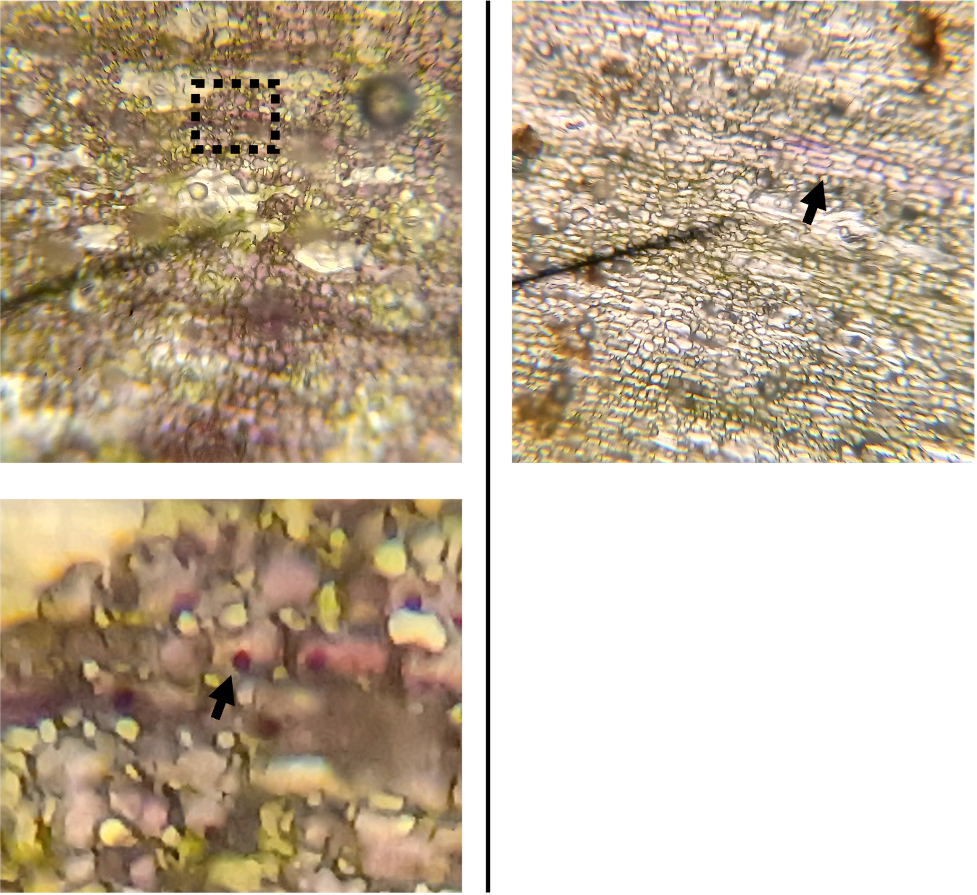
    Let’s take a closer look at the stems of each tomato variety. Using a simple light microscope, we can see that anthocyanins accumulate in a fraction of the epidermal cells of Indigo Blue Beauty, forming a sort of patchy pattern (Fig. 4, left top). Apologies for the blurry image! Though it was taken with my phone camera (lol), the biggest reason for the blur is actually trichomes – small hairs – which stick out from the tissue and appear out of focus. There may be a few stray air bubbles in there as well…

    Figure 4: Left top: Stem epidermal cells from tomato “Indigo Blue Beauty” at 100X magnification. Left bottom: A zoomed in portion of the same image, showing small, darkly pigmented bodies. Possible AVI’s in tomato epidermal cells? Right: Stem epidermal cells from tomato “Black Krim”.

    If we zoom in on the same image (Fig. 4, left bottom), we can see small bodies which appear to contain even greater pigment concentration than the surrounding material. I can’t say for certain what these are – Any thoughts would be appreciated! After doing some reading, I think it is possible that these are either Aromatic Vacuolar Inclusions (AVI’s) or anthocyanoplasts. These are small bodies containing high concentrations of pigment that are usually found within the vacuole of plant cells [22]. For reference, vacuoles are large organelles (often occupying most of a plant cell’s volume) with functions ranging from storage of chemicals to maintenance of turgor pressure, which gives plant tissues structural rigidity. AVI’s/anthocyanoplasts have been observed in a variety of plant species [19], though I have not been able to find any information on these bodies in tomatoes specifically… which is pretty neat! AVI formation has of course been studied in Arabidopsis already [3].

    On the right side of Figure 4, we can see that the epidermis of the Black Krim tomato has only a few clusters of cells which contain purple pigment (likely anthocyanins), which explains the lighter color of its stems.

    How did the high anthocyanin accumulation in the Indigo Blue Beauty tomato come about? Tracking the ancestry of my tomato plant has proven to be tricky, so take everything here with a grain of salt. From what I can determine, Indigo Blue Beauty is probably the result of a cross between a Blue tomato and Beauty King, bred by Bradley Gates at Wild Boar Farms [24][26]. Blue tomatoes are themselves likely the result of a breeding program run by the Oregon State University, where they acquired their high anthocyanin accumulation traits by crossing domesticated tomatoes with wild relatives [14][18][20]. There are a few different genetic loci which are known to confer the purple fruit trait in tomatoes [14], though sadly I am not entirely sure which is present in my particular plant. Another tomato developed from the same breeding program, Indigo Rose, possesses two such loci, called anthocyanin fruit (Aft) and atroviolacium (atv) [27]. Both loci contain genes encoding for MYB-family transcription factors. Transcription factors are proteins which interact directly with DNA. Their job it is to regulate the expression of other genes (basically, turn them on or off). In the case of Indigo Rose tomatoes, the MYB transcription factors at the Aft and atv loci appear to be involved in the regulation of genes which code for enzymes necessary for anthocyanin production [27].

    Anthocyanins in sunflowers:

    Behold! Here are two different cultivars of the sunflower (Helianthus annuus) growing outside on the deck (Fig. 5). I’m growing these in 7-gallon pots containing normal potting soil. They’re super easy to grow, provided you can keep them safe from predators (slugs and chipmunks in my case). The variety on the left (“Chocolate Cherry”) has a higher anthocyanin content than the variety on the right (“Autumn Beauty”).

    Figure 5: Apex of a Chocolate Cherry sunflower (left) and an Autumn Beauty sunflower (right).

    Why should we care? In this case, the high anthocyanin content of the Chocolate Cherry plant is probably a by-product of selection for striking, darker colored flowers. The anthocyanin pigments that give the flowers their deep color are apparently also present at earlier stages in the development of the plant. Unfortunately, my plants haven’t flowered yet. If I can keep them alive long enough (no guarantees!), I’ll try to share a picture of the blooms. Stay tuned.

    Why is chocolate cherry more heavily pigmented than its other sunflower brethren? Alas, I could not find any research on this particular sunflower variety. HOWEVER, I did find this paper [12], which identified the HaMYB1 gene, another MYB-family transcription factor (Ack! They’re everywhere!) as a possible regulator of floral anthocyanin accumulation.

    Gene of the week!

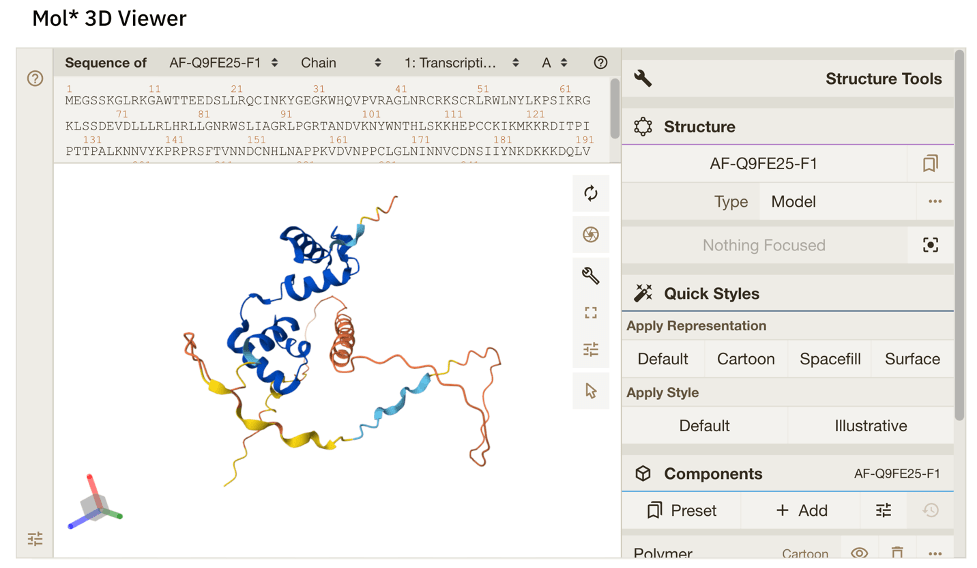
    Phew! We’re almost done. That brings us to our final segment… Gene of the Week! This week’s Gene of the Week is, of course, PAP1, aka. MYB75 in Arabidopsis! This gene is located at the AT1G56650 locus on chromosome 1 (denoted by “AT1G” in the locus ID number). The PAP1 protein is yet another MYB-family transcription factor… quelle surprise. The UniProt database indicates that PAP1 is 248 amino acids long and has a mass of ~28 kDa. A predicted protein structure from Alphafold is available (Fig. 6). In it, you can see the part of the protein which is responsible for its interaction with DNA (marked in dark blue, which indicates high confidence in the predicted structure).

    Figure 6: Alphafold predicted structure of PAP1/MYB75. Available here at: https://alphafold.ebi.ac.uk/entry/Q9FE25

    As we have seen before, overexpressing PAP1 (such as in the pap1-D line) results in higher anthocyanin accumulation in Arabidopsis [2]. A recent paper presented evidence that PAP1, along with another transcription factor called BZR1, binds to DNA upstream of genes involved in anthocyanin production to regulate their expression [10].

    Works Cited:

    [1] Ahmad, M., Lin, C., & Cashmore, A.R. (1995). Mutations throughout an Arabidopsis blue-light photoreceptor impair blue-light-responsive anthocyanin accumulation and inhibition of hypocotyl elongation. The Plant Journal 8(5), 653-658. DOI: 10.1046/j.1365-313X.1995.08050653.x

    [2] Borevitz, J.O., Xia, Y., Blount, J., Dixon, R.A., & Lamb, C. (2000). Activation Tagging Identifies a Conserved MYB Regulator of Phenylpropanoid Biosynthesis. The Plant Cell 12(12), 2383-2393. DOI: 10.1105/tpc.12.12.2383

    [3] Chanoca, A., Kovinich, N., Burkel, B., Stecha, S., Bohorguez-Restrepo, A., Ueda, T., Eliceiri, K.W., Grotewold, E., & Otegui, M.S. (2015). Anthocyanin Vacuolar Inclusions Form by a Microautophagy Mechanism. The Plant Cell 27(9), 2545-2559. DOI: 10.1105/tpc.15.00589

    [4] Downey, J.M. Measuring infarct size by the tetrazolium method. Retrieved July 27, 2025, from: https://www.southalabama.edu/ishr/help/ttc/

    [5] Gould, K.S., Jay-Allemand, C., Logan, B.A., Baissac, Y., & Bidel, L.P.R. (2018). When are foliar anthocyanins useful to plants? Re-evaluation of the photoprotection hypothesis using Arabidopsis thaliana mutants that differ in anthocyanin accumulation. Botany 154, 11-12. DOI: 10.1016/j.envexpbot.2018.02.006

    [6] Heijde, M., Binkert, M., Yin, R., Ares-Orpel, F., Rizzini, L., Van De Slijke, E., Persiau, G., Nolf, J., Gevaert, K., De Jaeger, G., & Ulm, R. (2013). Constitutively active UVR8 photoreceptor variant in Arabidopsis. PNAS 110(50), 20326-20331. DOI: 10.1073/pnas.1314336110

    [7] Khoo, H.E., Azlan, A., Teng Tang, S., Meng Lim, S. (2017). Anthocyanidins and anthocyanins: colored pigments as food, pharmaceutical ingredients, and the potential health benefits. Food & Nutrition Research 61(1), 1361779. DOI: 10.1080/16546628.2017.1361779

    [8] Kliebenstein, D.J., Lim, J.E., Landry, L.G., & Last, R.L. (2002). Arabidopsis UVR8 Regulates Ultraviolet-B Signal Transduction and Tolerance and Contains Sequence Similarity to Human Regulator of Chromatin Condensation 1. Plant Physiology 130(1), 234-243. DOI: 10.1104/pp.005041

    [9] Kwon, S., Ahn, I., Kim, S., Kong, C., Chung, H., Do, M., & Park, K. (2007). Anti-Obesity and Hypolipidemic Effects of Black Soybean Anthocyanins. Journal of Medical Food 10(3). DOI: 10.1089/jmf.2006.147

    [10] Lee, S., Kim, S., Park, T., Kim, Y., Lee, J., & Kim, T. (2024). Transcription factors BZR1 and PAP1 cooperate to promote anthocyanin biosynthesis in Arabidopsis shoots. The Plant Cell 36(9), 3654-3673. DOI: 10.1093/plcell/koae172.

    [11] Li, Z., & Ahammed, G.J. (2023). Plant stress response and adaptation via anthocyanins: A review. Plant Stress 10, 100230. DOI: 10.1016/j.stress.2023.100230

    [12] Ma, Z., Zhou, H., Ren, T., Yu, E., Feng, B., Wang, J., Zhang, C., Zhou, C., & Li, Y. (2024). Integrated transcriptome and metabolome analysis revealed that HaMYB1 modulates anthocyanin accumulation to deepen sunflower flower color. Plant Cell Reports 43, Article number 74. DOI: 10.1007/s00299-023-03098-3

    [13] Mattioli, R., Francioso, A., Mosca, L., & Silva, P. (2020). Anthocyanins: A Comprehensive Review of their Chemical Properties and Health Effects on Cardiovascular and Neurodegenerative Diseases. Molecules 25(17), 3809. DOI: 10.3390/molecules25173809

    [14] Mes, P.J., Boches, P., Myers, J.R., & Durst, R. (2008). Characterization of Tomatoes Expressing Anthocyanin in the Fruit. Journal of the American Society for Horticultural Science 133(2), 262-269. DOI: 10.21273/JASHS.133.2.262

    [15] Murchie, E.H., & Lawson, T. (2013). Chlorophyll fluorescence analysis: a guide to good practice and understanding some new applications. Journal of Experimental Botany 64(13), 3983-3998. DOI: 10.1093/jxb/ert208

    [16] Nakabayashi, R., Yonekura-Sakakibara, K., Urano, K., Suzuki, M., Yamada, Y., Nishizawa, T., Matsuda, F., Kojima, M., Sakakibara, H., Shinozaki, K., Michael, A.J., Tohge, T., Yamazaki, M., & Saito, K. (2013). Enhancement of oxidative and drought tolerance in Arabidopsis by overaccumulation of antioxidant flavonoids. The Plant Journal 77(3), 367-379. DOI: 10.1111/tpj.12388

    [17] National Center for Biotechnology Information (2025). PubChem Compound Summary for CID 154723842, Nasunin. Retrieved July 27, 2025 from: https://pubchem.ncbi.nlm.nih.gov/compound/Nasunin.

    [18] Oregon State University. The Purple Tomato FAQ. Retrieved July 27, 2025 from: https://horticulture.oregonstate.edu/oregon-vegetables/purple_tomato_faq

    [19] Pecket, R.C., & Small, C.J. (1980). Occurrence, location, and development of anthocyanoplasts. Phytochemistry 19(12), 2571-2576. DOI: 10.1016/S0031-9422(00)83921-7

    [20] Pinetree Garden Seeds (2025). Blue Beauty Tomato (Organic 80 Days). Retrieved July 27, 2025 from: https://www.superseeds.com/products/blue-beauty-tomato?srsltid=AfmBOoq9aMdEUZPMm_ByX7U1yF6bACgPTLnKnbWxmIZbh9SJFmK-61Pr

    [21] Pokorny, K., & Myers, J. (2023). OSU breeding program produced series of purple tomatoes with healthy antioxidants. Retrieved July 27, 2025 from: https://news.oregonstate.edu/news/osu-breeding-program-produced-series-purple-tomatoes-healthy-antioxidants

    [22] Pourcel, L., Irani, N.G., Lu, Y., Riedl, K., Schwartz, S., & Grotewold, R. (2010). The formation of Anthocyanic Vacuolar Inclusions in Arabidopsis thaliana and implications for the sequestration of anthocyanin pigments. Molecular Plant 3(1), 78-90. DOI: 10.1093/mp/ssp071

    [23] Wolff, K., & Pucker, B. (2025). Dark side of anthocyanin pigmentation. Plant Biology (early issue). DOI: 10.1111/plb.70047

    [24] Tomato seeds, Blue Beauty.  Retrieved July 27, 2025 from: https://www.rareseeds.com/tomato-blue-beauty?utm_source=google&utm_medium=cpc&utm_campaign=20736059190&utm_content=&utm_term=&campaign_name=%7bcampaignname%7d&gad_source=1&gad_campaignid=20742381038&gbraid=0AAAAAD-y-J_jFQ7Lt95ApSeCYniENGYzY&gclid=Cj0KCQjw-ZHEBhCxARIsAGGN96KEDYjoJ-Vj-5mPwnphXwIxDBbjK3LPjuhsck3gfrWENxBDCC5I4wEaAkG8EALw_wcB

    [25] Toufektsian, M., de Lorgeril, M., Nagy, N., Salen, P., Donati, M.B., Giordano, L., Mock, H., Peterek, S., Matros, A., Petroni, K., Pilu, R., Rotilio, D., Tonelli, C., de Leiris, J., Boucher, F., & Martin, C. (2008). Chronic Dietary Intake of Plant-Derived Anthocyanins Protects the Rat Heart against Ischemia-Reperfusion Injury. The Journal of Nutrition 138(4), 747-752. DOI: 10.1093/jn/138.4.747

    [26] Wild Boar Farms (2017). Blue Beauty: 100 PK. Retrieved July 27, 2025 from: https://www.wildboarfarms.com/product/blue-beauty-100-pk/

    [27] Yan, S., Chen, N., Huang, Z., Li, D., Zhi, J., Yu, B., Liu, X., Cao, B., & Qiu, Z. (2019). Anthocyanin Fruit encodes an R2R3-MYB transcription factor, SlAN2-like, activating the transcription of SlMYBATV to fine-tune anthocyanin content in tomato fruit. New Phytologist 225, 2048-2063. DOI: 10.1111/nph.16272

    EDIT: My chocolate cherry sunflower has flowered! Pictured with an autumn beauty sunflower in the background. 🙂

  • This is yet another blog about plants and plant science. There may be many like it, but this one is mine. More information about the blog is available below.

    Why read this blog?

    Why not? If you had the time to find this page, then I’m sure you’ll have time to learn something interesting about plants!

    What is the purpose of this blog?

    This blog isn’t meant to give comprehensive information about plant science, or act as a reference. That’s already been done. Rather, the purpose of this blog is to present concepts in plant science in a fast, easily-digestible format for educational and entertainment purposes. I want everyone else to appreciate plants as much as I do!

    I also want to share results from cutting-edge research and explain how it pertains to the concepts discussed. I want you to know HOW we know what we think we know. Ideally, this will help you to understand WHY scientific research is so important for our society.

    Most importantly, I want the ideas we discuss here to be easily observable – to anyone with any plants in their immediate vicinity. Plant science deals with REAL phenomena that ANYONE can see, if you know where to look. And science should be for EVERYONE.

    Who am I?

    It doesn’t really matter. This is the internet, after all. Everybody’s got an opinion.

    However, I promise to always present information that is as true as it possibly can be, within reason. Heck, I’ll even cite my sources!

    But please understand that in science, nothing is set in stone. Data are data are data, but what they tell us is subject to interpretation. Take everything with a grain of salt.

    “Theories pass. The frog remains.” – Jean Rostand.  This idea works for plants, too.

    Can you trust me?

    Trust no-one. See previous question.

    What if something in the blog is incorrect? Is the writer an idiot?

    To answer the second question… eh, probably. If you have questions, comments, concerns, or CORRECTIONS (especially important), please leave a comment on the page you want to discuss (If I can figure out how to add comments. Oh wait, it’s default. Good!). Necessary fixes will be made, and it would be great if we could get some dialogue going in here! Please be on your best behavior. Inside voices, please.